
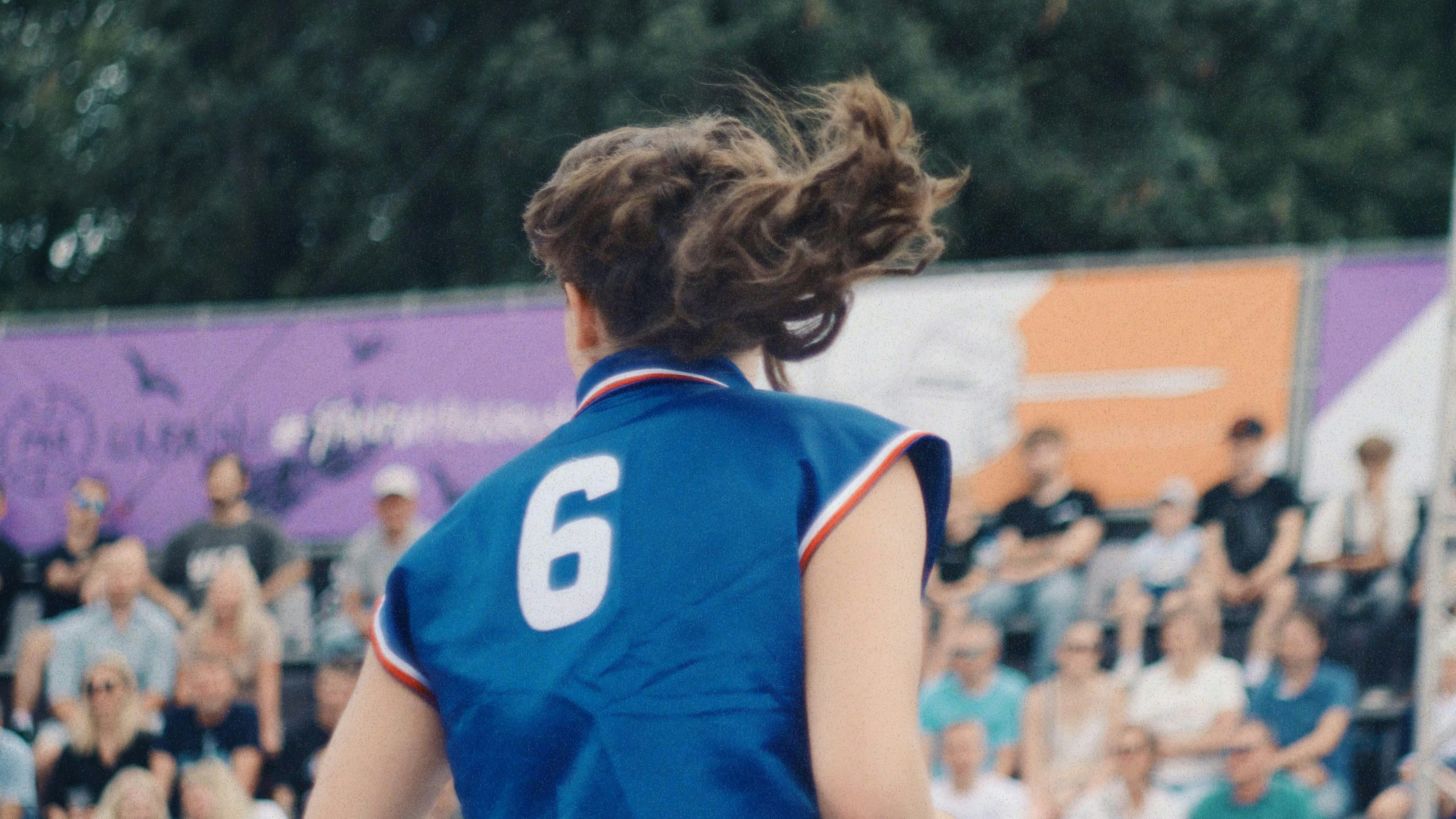
The 2025 WNBA All-Star Weekend was about two things: basketball and sisterhood.
Courtney Williams and Natisha Hiedeman live-streamed the entire weekend on their “StudBudz” Twitch channel. Nearly every player in Indianapolis made a cameo on their stream – including Caitlin Clark. Even Cathy Engelbert, the Commissioner of the WNBA, was shown dancing during one of their late-night streams.
During practice for the three-point competition, Sabrina Ionescu let rookie Sonia Citron use her back as a ball rack so she could practice her shots. When Ionescu won the competition, she gifted half of her winnings to Citron – and gave the other half to charity.
“I got to text [Citron] and let her know that I’m going to give her half of it, just for participating like that,” Ionescu said in a post-game presser. “It takes a lot of courage to be able to do that as a rookie. And what she did, I was really proud of her.”
When the game finally started, it felt more like a party than a competition – in the absolute best way.
Kelsey Plum was hugging A’ja Wilson and doing trick shots down the court. Breanna Stewart twice handed the ball off to someone else to make a shot. The first time was to Rhyne Howard, an injured player on the sidelines. The second time was to rookie Kiki Iriafen after Iriafen missed a three-pointer. (Iriafen, mind you, was playing for the opposite team.)
When Napheesa Collier lost a contact, the camera quickly cut to Howard helping her to put it back in. The Minnesota Lynx pranked Angel Reese into taking a team photo with them. In another viral clip, Ionescu and Clark jumped off the bench to challenge a foul. Wilson followed closely behind with a grin and a bag of Cheez-Itz in her hand.
“Oh no,” Clark said when asked if she planned to give her losing team a pep talk at halftime. “We’re going to listen to GloRilla and maybe get a drink.”
You wouldn’t know that the game started with solemn faces.
Just a few minutes before the highly anticipated and widely televised All-Star Game, every player walked onto the court for warm-ups in matching black t-shirts.
“Pay us what you owe us,” was written on each one.
The backlash was almost immediate.
Social media users came out of the woodwork to point out that the WNBA has “never made a profit” and that the players are “lucky to get paid any money at all”. Critics scrambled to do the math on WNBA’s profitability and made clickbait videos about “basic economics“. The players were called “delusional“. Shannon Sharpe talked about the shirts on his podcast and referred to revenue sharing for players as a “slippery slope“.
Even former player and two-time MVP Candace Parker criticized the stunt on her podcast with current player Aliyah Boston.
“Y’all cannot come out there with those shirts of ‘Pay Us What You Owe Us’,” Parker said. “[A]nd then do that in the All-Star Game. […] Because I tried to watch the All-Star Game, I’ll be honest. But after one slow eurostep … I was like, ‘I can’t. I’m a fan of the WNBA and I can’t watch this.’”
So much for the sisterhood, I guess.
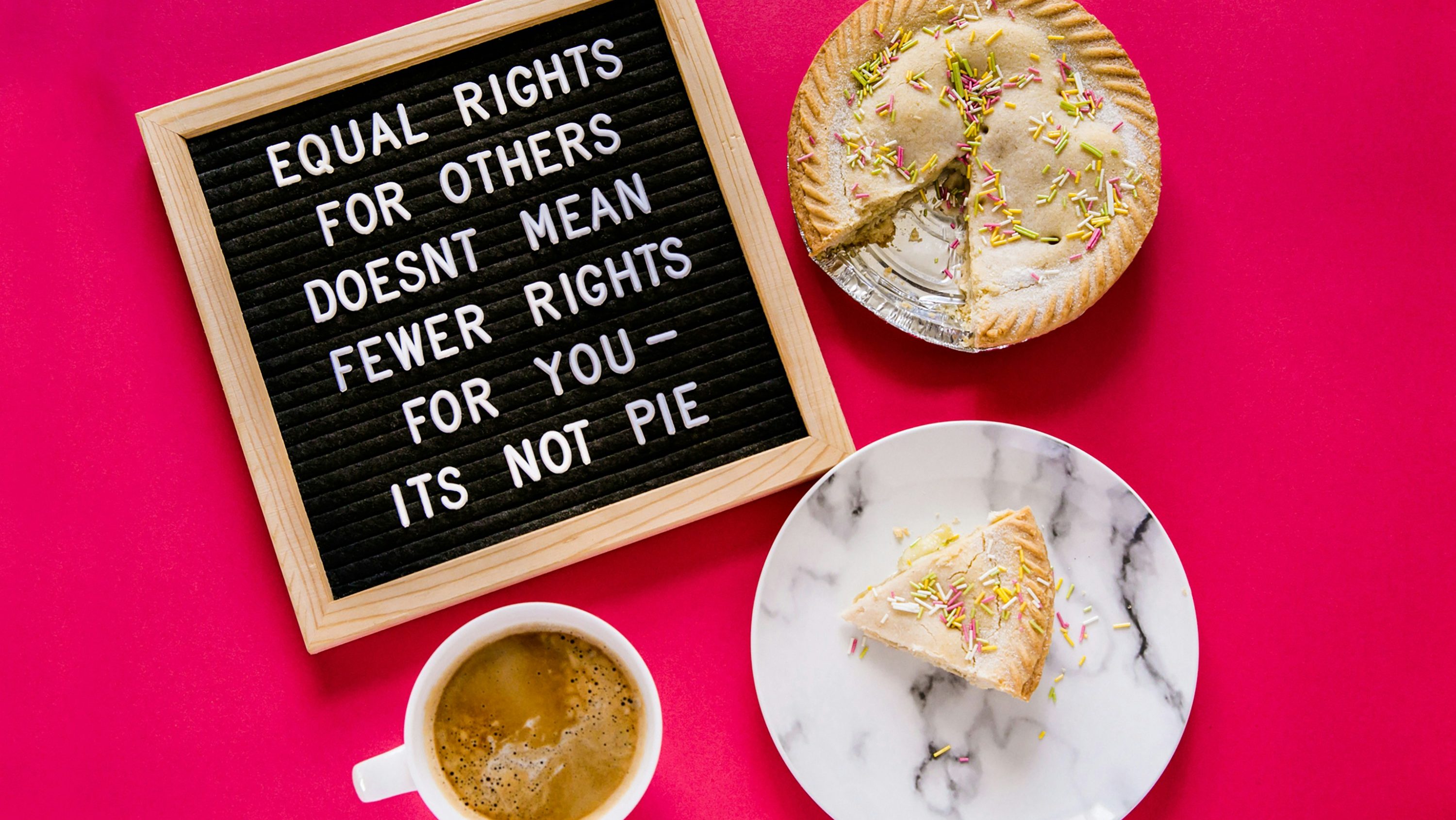
The issue of better pay for female athletes is nothing new.
Billie Jean King has spent her entire career campaigning for equal prize money for female players in tennis tournaments. (So has superstar Serena Williams.) Allyson Felix made headlines in 2019 by being open and transparent about the low-ball sponsorship deals she received after announcing her pregnancy. Megan Rapinoe briefly became the face of the issue that same year when the U.S. National Team filed a pay discrimination lawsuit against the U.S. Soccer Federation.
“There was a relentlessness,” Rapinoe said when describing the lawsuit in a 2023 interview. “[A]nd a refusal to accept anything other than what we felt like we deserved.”
So what do the players in the WNBA deserve?
If you ask their critics, the answer is simple: nothing.
No one is denying the pay disparity between the NBA and the WNBA – the lowest earner in the NBA earns over four times more than the highest earner in the W. But the NBA produced $11 billion in revenue last year. It makes sense that they can afford to pay their players eight figures instead of six.
The WNBA, in comparison, lost $40 million during the 2024 season – in spite of the new attention superstar Caitlin Clark brought to the league. In fact, the WNBA has never turned a profit since it started operating in 1997. It only continues to exist because of “subsidies” and financial backing from the NBA. It’s a pet project at best and a money hole at worst.
If the league isn’t profitable, how can the players seriously be asking for higher salaries?
Fortunately, the answer to this question is also simple: they aren’t.
WNBA players are currently renegotiating their collective bargaining agreement (CBA) with the league’s leadership, and their biggest ask isn’t higher salaries. It’s higher revenue sharing.
NBA players currently receive about 50% of the league’s revenue through an equitable redistribution system that benefits all players. Prior to the 2016 negotiations, they received as much as 57%.
WNBA players, meanwhile, receive just 9.3%.
“I don’t think I should get paid the same as LeBron,” four-time All-Star Kelsey Plum said in a 2022 interview. “But the percentage of revenue — like for example: they sell my jersey in Mandalay Bay, I don’t get a dime. So that’s the stuff we’re talking about.”
Every WNBA franchise has doubled in value over the last year. Ticket sales increased by 145% compared to last season, leading to attendance so high it broke the 2002 season-wide record with a month still left in the regular season. The W further established its growth spurt in June when it was announced that the league would expand from 13 active teams to 18 by 2029.
Less than a week after the 2025 All-Star Game, the WNBA confirmed a media rights deal with Disney, NBC, and Amazon that would net the league $200 million each year for the next 11 years – a whopping 333% increase from the previous $60 million valuation.
“When it comes to salary and revenue share, we’re fighting to share in the growth that we created,” Indiana Fever guard Sophie Cunningham said in June. “Every other category across the business has grown. That’s media rights, ticket sales, and team value. The only thing that is still capped is our player salary, which is insane.”
Players can see what’s coming – increased attendance, new teams, and a massive broadcast deal are just the tip of the iceberg. It should be no surprise they’re asking for a bigger slice of the pie before it even comes out of the oven.
For now, let’s accept at face value that the WNBA isn’t profitable.
Critics have argued this should be the end of the discussion – that there is no pie to divvy up and players should be “grateful” for what they already have.
Let’s take a step back and look at the bigger picture.
The NBA’s origins date back to 1937 when the National Basketball League was formed. It would later merge with the Basketball Association of America in 1949 to formally create the NBA.
For the first decades of its life, the NBA struggled.
Basketball always had a limited audience in the U.S., especially compared to sports like baseball and football. It was financially unstable even during its limited growth spurts in the 1960s and 70s. By the early 1980s, the NBA was approaching bankruptcy. Franchises were losing money, attendance was at an all-time low, and television ratings were dropping.
Things finally turned a corner with the entrance of superstars like Larry Bird and Magic Johnson. The NBA started making a healthy profit and player salaries started to sky rocket to the eight and even nine-figure salaries we see today.
And it only took about 40 years of investment.
It took the NFL about the same amount of time to see real growth after several fumbling starts in the 1930s and 40s. Some MLB teams were still operating at a loss this summer. Major League Soccer was founded a year before the WNBA, and over half of its teams are still operating with million-dollar losses each year.
The WNBA will host its 30th season in 2026. Operating at a $40 million dollar loss isn’t just fine – it’s actually doing better than expected for a league of its age. We might naturally assume that the current salaries and revenue sharing are just a reflection of a young organization still waiting for its big break.
We’d be wrong.
The average salary for Major League Soccer players is three times that of WNBA players – and the highest salary is nearly 50 times what the most expensive WNBA player makes.
In the 1971-72 season, the NBA was about 25 years old. Average game attendance was barely above 8,000 and the average player’s salary was $90,000. Adjusted for inflation, that’s an average of over $750,000.
The current average salary in the W is $119,000 – with an average game attendance of just over 11,000.
In fact, salaries and revenue sharing are so mismatched that modern-day WNBA players are paid worse than NBA players were at any time period in the organization’s history.
“Men are so often paid and compensated on the potential that they show,” Rapinoe explained in a 2020 interview. “[N]ot necessarily what they’ve done. And women are so often paid on what they’ve actually done — which normally I would say, we outperform what our contract was.”
In a 2024 survey conducted by Deloitte, brands cited unproven business returns, lack of awareness in total reach, financial constraints, and limited industry data as their top reasons for not investing in women’s sports.
Unproven. Lack of. Limited.
Results – versus potential.
Women’s sports are often stuck in this vicious cycle. Without investment, the WNBA can’t grow. But if it doesn’t grow, investors complain about lack of returns. Investments subsequently shrink, the W stagnates – and the cycle continues.
In 1984, David Stern became the commissioner of a struggling NBA. Stern turned it into the powerhouse we know today by increasing player salaries, shifting the media focus from teams to to superstars, and aggressively campaigning for better media deals. In 1997, he helped launch the WNBA and publicly defended the NBA’s investment in it.
“[Stern supported the WNBA] because he believed the WNBA was the right thing,” Val Ackerman, the W’s first president, said in 2014. “[T]hat it filled a need and would in time be financially successful. He was pragmatic about that, though, saying, ‘[w]e knew it was going to be a long haul’.”
Adam Silver has worked at the NBA since 1992 and became commissioner in 2014. For decades, he has publicly complained about the WNBA’s lack of popularity and profitability – all while doing very little to invest in its success.
Critics have long claimed that smaller media deals are a major reason why the W has lagged in popularity and growth. Media companies have countered that the lack of fans is why they don’t want to air women’s sports. Last year, Silver sided with the media by defending the NBA’s choice to tie the W’s media deals to their own.
But what happened when ESPN decided to move women’s basketball to primetime in 2022?
“I think we must note that what we saw with Caitlin Clark and Angel Reese is also a product of the networks changing how they cover women’s college basketball,” academic and sports author David Berri said in 2024. “It is not a coincidence I think that we suddenly discovered major stars in women’s college basketball right when women’s college basketball started being broadcasted on a major network.”
It turns out results are a lot easier to see when you invest in potential.
Who knew?
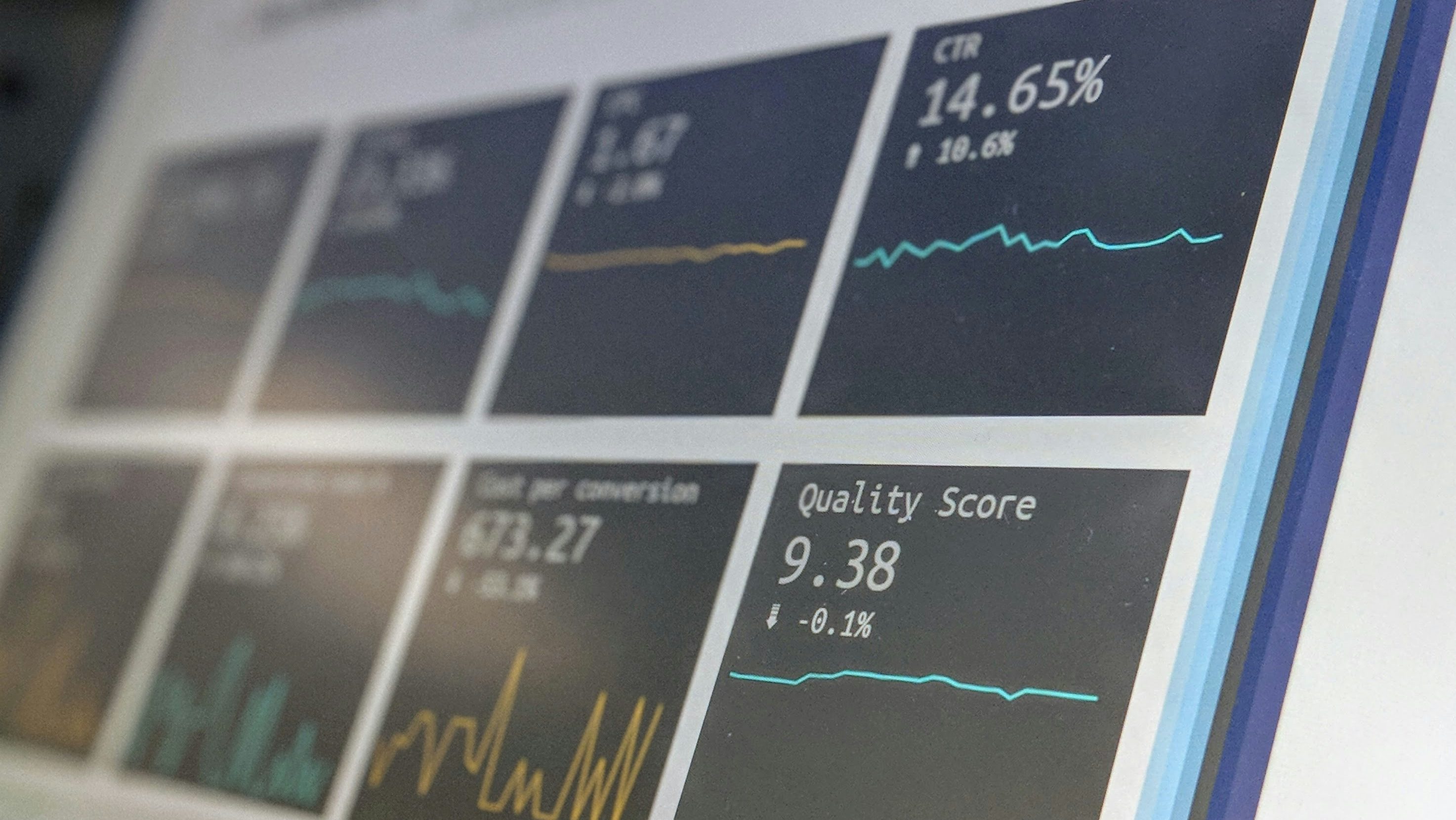
It’s easy to read that the WNBA isn’t making a profit and jump to the conclusion that it’s because there’s not enough money coming in the door. But if the WNBA is actually operating at a loss, it’s not necessarily because it’s not generating enough income.
Are the top executives being paid the same amount as the players? And are those executives making sound financial decisions?
Based on past experience, the answer is to both questions is probably not.
Three years ago, WNBA Commissioner Cathy Engelbert and her leadership team raised eyebrows when they sold a 16% stake in the WNBA to a group of investors in exchange for $75 million that would be spent on marketing and infrastructure. The deal was criticized for drastically undervaluing a league that was estimated to be worth hundreds of millions of dollars.
(For context, a $75 million investment would get you about 16% of the New York Liberty, a team which was valued at a whopping $450 million earlier this year.)
To make matters worse, the deal also further complicated the W’s already flawed ownership structure. Prior to 2022, the WNBA’s equity was split 50-50 between WNBA owners and NBA owners. With investors in the picture, it’s now a confusing 42-42-16 split.
But make no mistake – it’s the NBA that still holds the reigns.
Almost half of the current WNBA teams share ownership with NBA franchises. Combined with the NBA’s overall stake in the league, the NBA wields over 60% voting control and maintains veto power on league direction, policies, and economics.
“If all the WNBA owners say they want to do something and the NBA says no,” Atlanta Dream CEO Suzanne Abair said while describing the ownership structure. “[T]he answer is no.”
Think of Adam Silver, and the shared media deal above. Unproven. Lack of. Limited.
While the NBA maintains control, the W continues to get short changed.
As the league announces more and more expansion teams, WNBA owners are the ones shouldering the costs – not the NBA or the 2022 investors. Adding more ownership groups to the league means that 42% has to be divided between more people. Owners who invested in the W early are watching their slice of the pie dwindle with each additional franchise.
The league’s complicated ownership has even impacted CBA negotiations. Players want the same revenue sharing that their counterparts in the NBA receive – but revenue sharing in the NBA means getting 50% of the entire pot. Equivalent revenue sharing in the W would only mean 50% of what the WNBA actually controls.
“It’s going to be really hard,” Vice President of the players union Napheesa Collier told the Sun-Times in July. “When an outside source owns the majority of your league, it’s either not going to get there, or it’s going to take a very long time for [us to be] making the kind of money we want to make.”
That 42% is looking smaller and smaller everyday.

There’s been a lot of talk about Collier in 2025.
She was in the running for MVP and was the star of a new WNBA commercial that showed off her 2024 Defensive Player of the Year title. On October 10, Collier was unanimously selected to the to the All-WNBA First Team for the third year in row. With just six years in the league, Collier has already made a name for herself as a legend and leader in the W.
But 10 days before receiving her accolades for the 2025 season, Collier sat down for an exit interview after the Minnesota Lynx were knocked from the playoffs. She walked into the press conference with a serious expression and announced that she was going to read a prepared statement before taking any questions.
“I’m concerned about the future of our sport,” Collier told reporters. “We have the best players in the world. We have the best fans in the world, but right now, we have the worst leadership in the world.”
As vice president of the players union, Collier plays a huge role in the ongoing CBA negotiations. Her remarks were succinct and clearly directed at the WNBA’s current commissioner. She came with receipts and claimed to be quoting Engelbert directly.
“[S]he told me, ‘Players should be on their knees, thanking their lucky stars for the media rights deal that I got them,’” Collier continued. “That’s the mentality driving our league from the top.”
Collier wasn’t speaking alone. After her press conference, supporting statements piled in from players across the league. Engelbert quickly released a statement denying the allegations. Shortly afterwords, Collier canceled a meeting with Engelbert’s office.
“I think [Engelbert’s statement] just speaks to that lack of accountability,” Collier said. “[A]nd so I really have nothing further to say.”
The standoff over CBA negotiations has dominated discussions in the W from the All-Star Game straight through to the championship games. But Collier’s statement caught the attention of the media and took the fight to another level.
If Collier’s accusations about Engelbert are true – and it appears that they are – then it draws into question whether the W’s leadership is being honest about their losses in the first place.
As private entities, the NBA and the WNBA are under no obligation to publicly publish their financial information – and, in fact, are actively incentivized not to. Obscuring the W’s actual profit puts the players at a clear disadvantage during negotiations.
“I feel like we’re going based off educated estimations,” President of the players union Nneka Ogwumike said while discussing CBA negotiations in June. “We still have a lack of transparency that [doesn’t] allows us to really know. There is nothing that we know when it comes to how much money the league is making.”
It’s a tactic most sports franchises use – and one the W probably learned from its parent company.
“We should also note that going forward, all statements about the WNBA’s lack of profitability must be regarded as completely meaningless for sure,” Berri said in a 2024 interview. “The NBA just negotiated a $76 billion media deal and arbitrarily decided the WNBA gets $2.2 billion of this amount. That $2.2 billion was not a result of market negotiations. The NBA simply decided that’s what they get. If the NBA is now choosing the revenue numbers, they can’t also decide that profits don’t exist.”
But we have no way of checking the W’s math. Conveniently for their leadership, we will just have to take them at their word.
Luckily for us, their word is on our side.
“It’s coming to our 15th anniversary and the naysayers said we wouldn’t get past two,” former NBA Commissioner David Stern said in a 2010 interview. “The NBA is doing better than breaking even on the WNBA.”
Better than breaking even? That doesn’t sound like a loss to me.
King’s advocacy lead to the U.S. Open becoming the first major tournament to offer equal prize money to men and women. After Felix spoke out about her experience with Nike, the company adjusted their maternal policy to eliminate wage reduction. Rapinoe and her teammates settled their lawsuit with the U.S. Soccer Federation for $22 million.
“For us as players I’m just so proud of the way we stuck together and really just kind of put our foot down,” Rapinoe said when the settlement was announced in 2022. “This is a huge win for us.”
In the WNBA, players are still fighting for a win of their own.
As of October 18, CBA negotiations are still ongoing. A lockout is looking more and more likely as the October 31 deadline approaches and the players continue to hold the line.
Matching t-shirts at the All-Star Game was only the beginning of their solidarity.
League veterans have been recruiting rookies to the union and educating them on the importance of CBAs. As a result, Ogwumike reported that more players showed up to meetings this season than ever before. Players from every team backed up Collier after her public statements, and many added statements of their own.
“I think, for myself, that’s the best part of it,” Caitlin Clark said this summer. “That’s the most powerful thing is all the girls from across the league just being in that room together.”
The sisterhood, in other words, is still going strong.


Leave a Reply