
Content warning: This article features spoilers for the video game Baldur’s Gate 3.
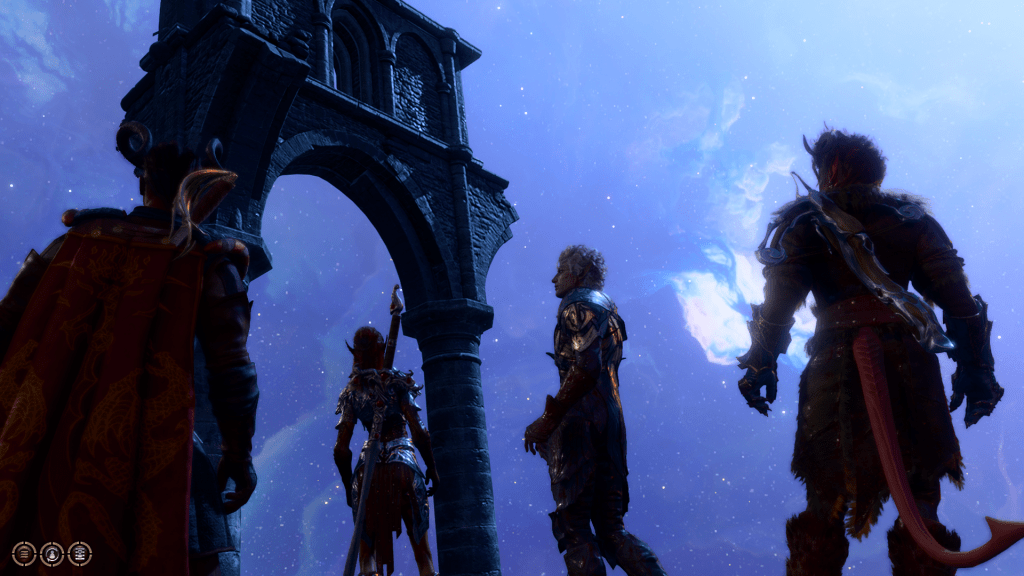
Baldur’s Gate 3 was released by Larian Studios in 2023. It was the third game in their series set in the Dungeons & Dragons universe, and indisputably the most successful. Baldur’s Gate 3 won so many awards that it started to affect the game’s ongoing development, forcing the studio to send rotating groups of team members to award shows to avoid further disrupting their work.
In April 2024, it became the first game to sweep the Golden Joysticks, BAFTAs, Game Developers Choice, DICE, and The Game Awards, taking home Game of the Year at each award show.
The accolades are well-deserved. Baldur’s Gate 3 boasts beautiful graphics, an immersive story world, unforgettable characters, and game play that’s just downright fun.
I should know – I have almost 700 hours logged. And I’m not slowing down any time soon.
Baldur’s Gate 3 is a role-playing game. The player is thrown into a fantasy world and forced to make choices that will determine how the story unfolds. Some choices, of course, have greater consequences than others.
Will you choose good? Or will you choose evil?
I’m the sort of gamer who always lets Blathers tell me about my latest museum donation just because I don’t want to hurt his feelings, so. Yes, I almost always pick the “good” choices in Baldur’s Gate 3.
But sometimes, being evil is fun.
Earlier this year – after beating Baldur’s Gate 3 for the fifth time – I decided it was time to be evil. I wanted to see what it was like, what new corners of the game I could turn over by embracing my darker side and clicking on the second dialogue option instead of the first.
The result has been less than satisfactory.
I’m just about to finish Act Two, and I only have four companions in my camp. As I progress in the game, I’m struggling with fights I normally breeze past. I have worse equipment, fewer experience points (XP), and – worst of all – the lowest companion approval I’ve ever had in a playthrough.
I’m also beating the game faster than I ever have before. It normally takes me between 80 and 100 hours to finish a single playthrough. This one will almost certainly take me less than 60.
I’m not alone. I’ve seen a lot of players complain that being evil is unrewarding, that the game locks you out of too much content without filling in the blanks with anything new. The evil path just isn’t satisfying, isn’t as well-developed as the good path. Some players have even called Baldur’s Gate 3 “unfinished“, arguing that the developers should update the game to flesh out the evil path out more.
“So yeah, what is the point of Evil when it actively [screws you over] at just about every turn?” one player posted on Reddit. “Just being a dick? Cause the appeal of evil is supposed to be that you’re selfish and get rewards for it, but you don’t get rewarded for being evil. You’re actively penalized and make things harder for yourself if you choose to be Evil.”
Do video games have a responsibility to reward players for making “evil” choices?
And – if they punish you instead – does that make it a bad game?
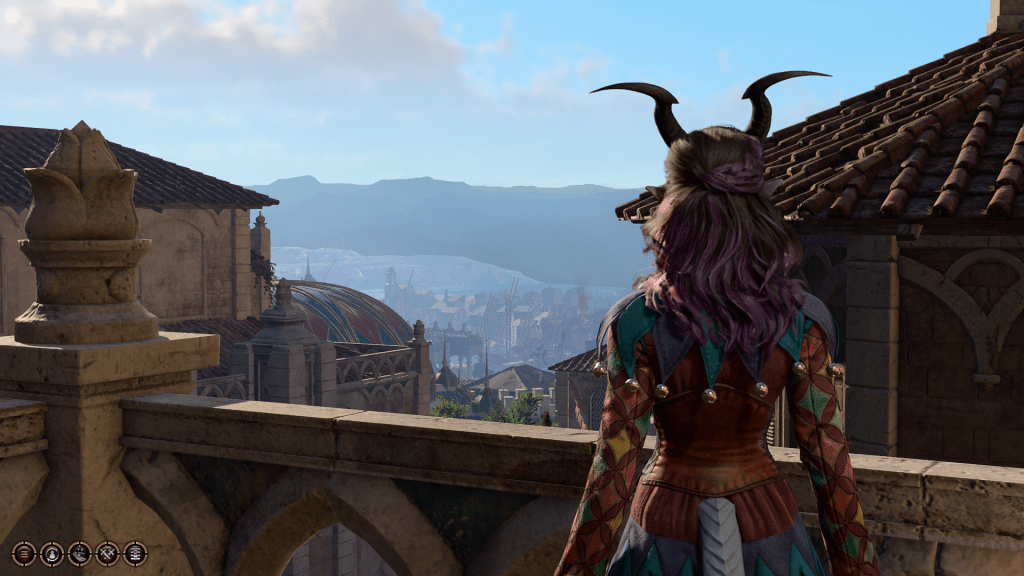
There are hundreds of choices a player might make in Baldur’s Gate 3. Some of these are just minor dialogue options – like saying “I don’t care” instead of “thank you for telling me”. But others have far larger impacts on the story world and plot.
Early on in the game, for example, the player encounters the Emerald Grove and quickly gets drawn into a conflict between the tiefling refugees and the druids who are trying to force them out. But if the refugees leave the Grove, they’ll be at the mercy of the goblins who roam the surrounding forest. The fate of the refugees is one of the main plot lines in the first act of the game. As a result, the player’s decision has lasting impacts on the rest of the game.
Helping the refugees is the obvious “good” choice. They are innocent, peaceful people just looking for a new home. If the player saves them from the goblins and the druids, they will continue to meet the refugees for the rest of the game. They start to feel like friends, after a while, popping up in unexpected places in need of the player’s help or kind words. They’re useful friends, too, offering up food, gold, and even enchanted robes when the player helps them out.
Mostly, they just make the world of Baldur’s Gate 3 feel a bit bigger.
There are dozens of refugees, each with their own unique personality and story. Mol is the leader of a group of orphaned children who are always trying to catch the player in some money-making scheme. Arabella begins studying magic only after the player lets her stay at camp. Rolan and his siblings are always bickering with one another. Even the refugees’ leader, Zevlor, has an entire character arc about his failures and responsibilities.
Throughout the game, the refugees provide background chatter and activity. A sense of immersion, of a world larger than the player and their traveling companions.
If the player chooses to kill the refugees, there is no replacement for this.
The side quests and the extra story lines will quietly disappear. Mol and her friends will not be in Act 2 to sell the player supplies or hand over the key to that locked door they want to open. Arabella will not teach the player any spells. Zevlor will not help them fight any mind flayers. For the rest of the game, the player will have to find the equipment and tools they need on their own – or, in some cases, make do without them.
Moreover, the player will just have fewer things to do. Fewer characters to talk to. Fewer side quests to complete. Fewer allies to help in battle. Their world will be that much emptier without the refugees by their side.
This pattern is repeated across the game.
Killing the refugees also locks the player out of recruiting the druid Halsin, who is a major traveling companion required for lifting the Shadow Curse from the land in Act Two. Letting Barcus die in Act One removes him from the rest of the game, where he would otherwise play a critical role in several different subplots. Not saving Mayrina from Auntie Ethel in Act One prevents both characters from appearing in Act Three.
Unlike most other characters, Halsin can at least be “replaced” with Minthara, the leader of the goblins in Act One. But Minthara doesn’t give the player access to the Shadow Curse quest and has no additional side quest of her own. She also can’t join the player’s traveling party until much later than Halsin would normally join.
Even the player’s choices in Act Two have important ripple effects. Letting Isobel get kidnapped locks the player out of learning anything about her history, and taking down Ketheric is certainly harder without Dame Aylin and the Harpers at your side.
In short – being evil means playing a smaller, emptier version of Baldur’s Gate 3.
It’s understandable why players have complained about this. It can be demoralizing to feel like each quest has a “right” choice and a “wrong” choice. The whole point of a role-playing game is to revel in the options at your fingertips and wonder how they might shape the world around you. It’s not to agonize over whether a couple sins might make you miss out on hours of content later on.
This might be a consequence of a game that’s unfinished, that needed a little more time in the developer’s workshop before being pushed out to fans. But if you’ve been paying attention, you might realize it goes deeper than that.

One of the things I find most impressive about Baldur’s Gate 3 is its commitment to its theme. It’s challenging enough to write a compelling story that covers 100 hours of game play, but keeping that story consistent without growing stale is another level of difficulty all together.
Baldur’s Gate 3 strikes this balance surprisingly well. From Act One through Act Three, the story circles back again and again to a central question:
Power or freedom?
As the player explores the world of Baldur’s Gate 3, they’ll have to deal with this question in a multitude of different ways. There isn’t necessarily a right or wrong answer – only the player’s choices and the subsequent consequences.
The main plot of the game even revolves around this theme in a fairly obvious way. The player is on a quest to get an alien parasite removed from their brain. However, they quickly discover that the parasite’s unique powers can give them an edge in the many, many fights throughout their journey. They can choose to collect more parasites, to consume them and keep developing new abilities – or they can choose to avoid using these powers and prevent the parasite from further taking over their mind.
“Something stirs deep within you, hungry and alert,” the narrator tells the player when they first use the parasite’s powers. “It’s taking something you’ll never get back.”
As the player travels, they’ll pick up several companions along the way – each infected with their own parasite and grappling with their own difficult decisions.
Lae’zel is the first companion the player meets, a fiery warrior from an alien race. In trying to help the party remove their parasites, she discovers the lies and corruption at the heart of her own civilization. Lae’zel can either pledge her life to her tyrant queen and finally wield a silver sword atop a red dragon as she always dreamed – or she can turn against her queen and live the difficult life of a revolutionary.
Shadowheart appears almost immediately after Lae’zel as a cleric trapped in an alien pod and crying out for help. Shadowheart has dedicated her entire life to worshiping a dark goddess who hasn’t given her anything in return. She must either sign over her soul and become a leader in her goddess’ church or renounce the only life she’s ever known and finally become her own person.
Astarion or Gale usually come next. Astarion is a vampire spawn who is experiencing his first taste of freedom in two centuries. When he discovers his master is planning to complete a dark ritual which will grant him the powers of a “vampire ascendant”, Astarion must choose to either stop the ritual or complete it for himself.
Gale, on the other hand, is a powerful wizard who has been abandoned by the goddess of magic. When he and the player discover a powerful crown at the heart of the parasite conspiracy, Gale must either return it to the goddess or keep it and become a god in his own right.
Wyll appears outside the Emerald Grove as a hero and a savior, but his image sours slightly when it’s revealed that the source of his power is a pact with a devil he made at seventeen. He must decide if finally breaking the pact and reclaiming his freedom is worth sacrificing the powers of a warlock – and his estranged father’s life.
In each case, the story unfolds over hours of game play, of dialogue and cut scenes interspersed with epic fights and world exploration. Each companion’s story feels unique and heartbreaking.
But the choice is, essentially, the same.
Even the side plots in this game re-enforce this theme. Mol, the leader of the refugee children, decides to make a deal with a devil called Raphael to keep her friends safe. She even grows angry if the player kills the devil and subsequently breaks the deal.
“The desperate will do anything to get out of a bind,” Raphael writes in a note the player can stumble upon in the House of Hope. “That mind flayer toys with its food, but it’ll become hungry soon enough, and they have proven such malleable little things. The Crown for the Hammer – more than a reasonable trade, I should think. After all, what use is power if you don’t have freedom?”
Baldur’s Gate 3 beats the player over the head with this theme again and again. Ultimately, the player’s choices often aren’t about “better and worse” or “good and evil”. They’re really about sacrifice.
Is Gale’s godhood worth his soul? Is Wyll’s freedom worth his father’s life? Is losing your identity worth that extra boost from an alien parasite?
In a world full of choices, are you prepared to live with the consequences?
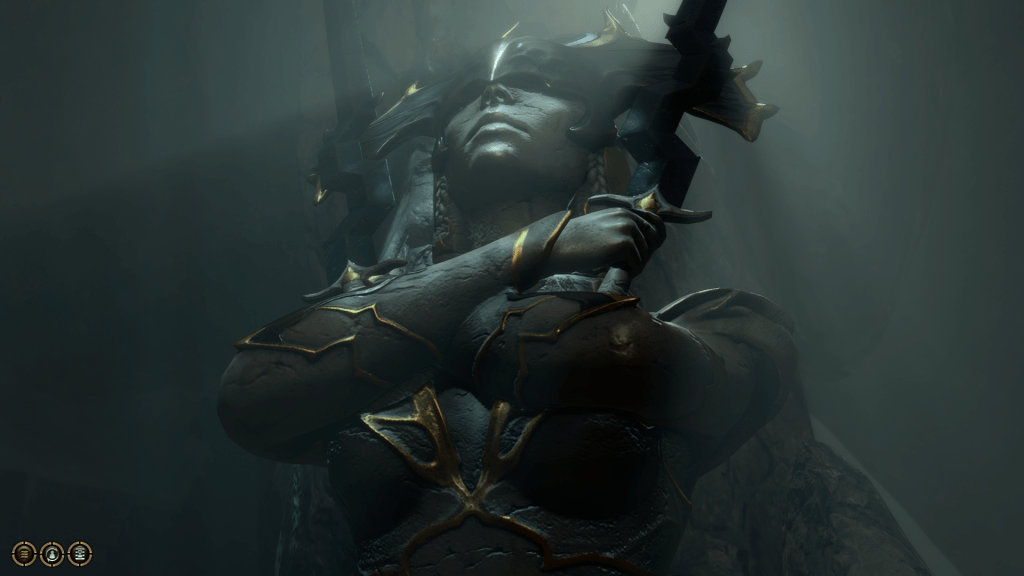
If the conflict between power and freedom is a main theme in Baldur’s Gate 3, it shouldn’t be surprising that it persists even when the player makes “evil” choices instead of “good” ones.
Yes, you can sacrifice the refugees in exchange for the power of the goblin cult. Yes, you can sacrifice Shadowheart’s soul in exchange for valuable armor from her dark goddess. Yes, you can sacrifice your brain in exchange for parasites that help you kill people.
But actions have consequences.
“It’s intentional,” Baldur’s Gate 3‘s lead writer, Adam Smith, said in a 2023 interview with IGN. “Your world is a little emptier because of [your choices], and you are playing a route which is much more selfish and much more, again, afraid. You end up isolated.”
Killing the tiefling refugees certainly felt selfish. Betraying them was easy, and the resulting fight took me less than ten minutes to win. It was a slaughter. I didn’t even use any special strategies or items – and still, my team walked away with nearly full health.
Arriving at Last Light Inn – one of the main locations in Act Two – left me feeling melancholy. Mol and her merry band of orphans were nowhere to be found. Rolan wasn’t drinking himself into a stupor at the bar. Barcus wasn’t making weapons in a corner.
After killing Isobel, the entire inn was emptied in a matter of minutes. There is no light, no dialogue or background chatter. Just the Shadow Curse and Baldur’s Gate 3‘s soundtrack.
Physically, my camp is the same size. It has the same cliffs and hills and rivers it always does, and my bedroll is in the same spot it always is.
But I have four companions now instead of seven. Halsin, Gale, Wyll, and Karlach were all casualties of my evil choices in Act One. My four remaining companions – including MInthara – only have terse greetings to offer me. My approval is too low to trigger most of their dialogue.
Next time I load my save file, I will approach the final battle of Act Two nervous and unprepared. The perfect game plan I’ve used in every previous play through has been shattered by the loss of my companions, by the loss of the equipment and experience points I’m used to having.
I’m sure I’ll manage just fine – but I also know there won’t be anything waiting for me on the other side.
I’ve turned Shadowheart into her dark goddess’ weapon. I’ve killed Isobel, Dame Aylin, Jaheira, and Halsin. The refugees won’t be waiting for me in Act 3. I won’t even have Scratch the dog there to comfort me.
“There is a light in every living thing,” reads a poem found in Act 2 of Baldur’s Gate 3. “It’s crawling t’wards the surface to survive. And in its wake, it tramples everything. We’ll kill the rest, so that the one can thrive.”
Knowing that Baldur’s Gate 3 is so consistent in its themes and storytelling is one of my favorite things about the game. Nothing brings me greater joy than reading a book in the shadow-cursed lands about the fate of a power-hungry leader or talking to an NPC in Rivington who offers me some wise words about freedom.
“What use his refusal?” reads one of the many letters the player can collect late in the game. “He thought himself free, but destiny claimed his corpse the same.”
For a role-playing video game based on D&D, Baldur’s Gate 3 features a surprisingly well-constructed story that treats complex issues and philosophical questions with the nuance and care they deserve.
But take this essay with a grain of salt.
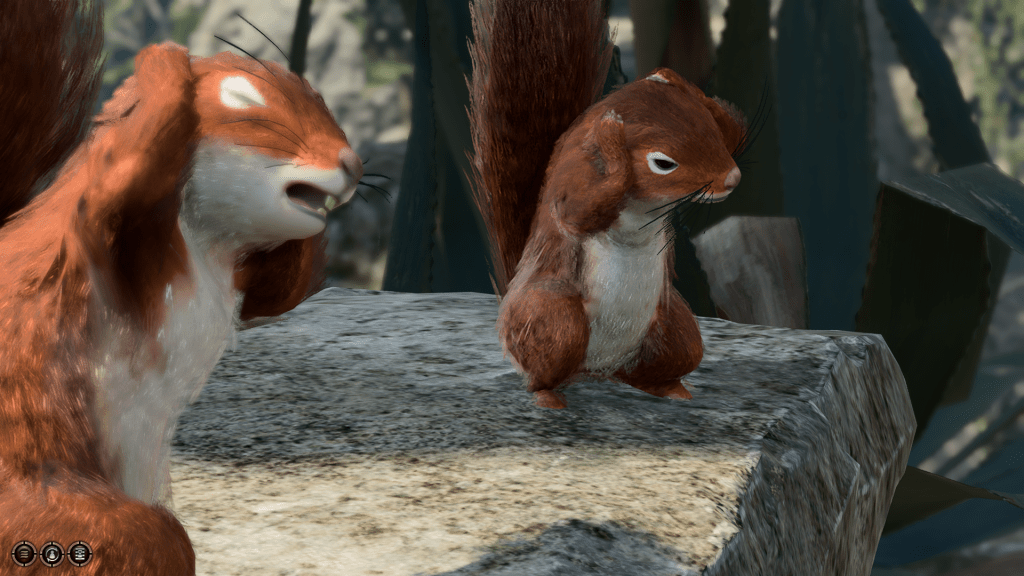
Baldur’s Gate 3 is also a game where you can lick a giant spider’s corpse, get turned into a wheel of cheese, and dropkick a squirrel. Act 3 features a side quest where you have to collect the severed body parts of a dead clown to return to the circus ringleader for reassembly and resurrection. (The ringleader in question is a necromancer drag queen with a troupe of dancing zombies.)
That’s all without mentioning Halsin’s iconic romance scene in Act 3.
Video games are always about the players, and this is especially true for a role-playing game like Baldur’s Gate 3. Each player’s experience is unique to them, to their choices and their story. Good or evil, monk or druid, spider-licker or bear-lover – the most important thing is just to play the game the way you want to.
And with a game as big as Baldur’s Gate 3, there really is something – and someone – for everyone to love.

 Rachel M. Beard
Leave a comment