
It’s the weekend. I’m somewhere in West Virginia – at a family reunion, maybe. I might be visiting my parents in Michigan, or staying with my friends in Maine. I’m talking to a stranger, the friend of a friend or the wife of a cousin. I balance a Coke between my hands and run my tongue over my teeth, searching for lipstick stains.
“Where are you from?” the stranger asks. I wonder if they’re just trying to make conversation or if they’ve noticed my nasally accent.
“I’m from Michigan,” I tell them regardless. “But I live in Atlanta.”
“Do you like it there?”
“It’s too hot,” I answer honestly, earning a polite laugh. “But it’s fun. There’s always something to do.”
I pause to clear my throat and check my notes.
“Have you ever been?” I ask despite already knowing the answer.
“Well no,” the stranger says, reading perfectly from my script. “But I’ve been to the airport.”
I tell them I’m not surprised.
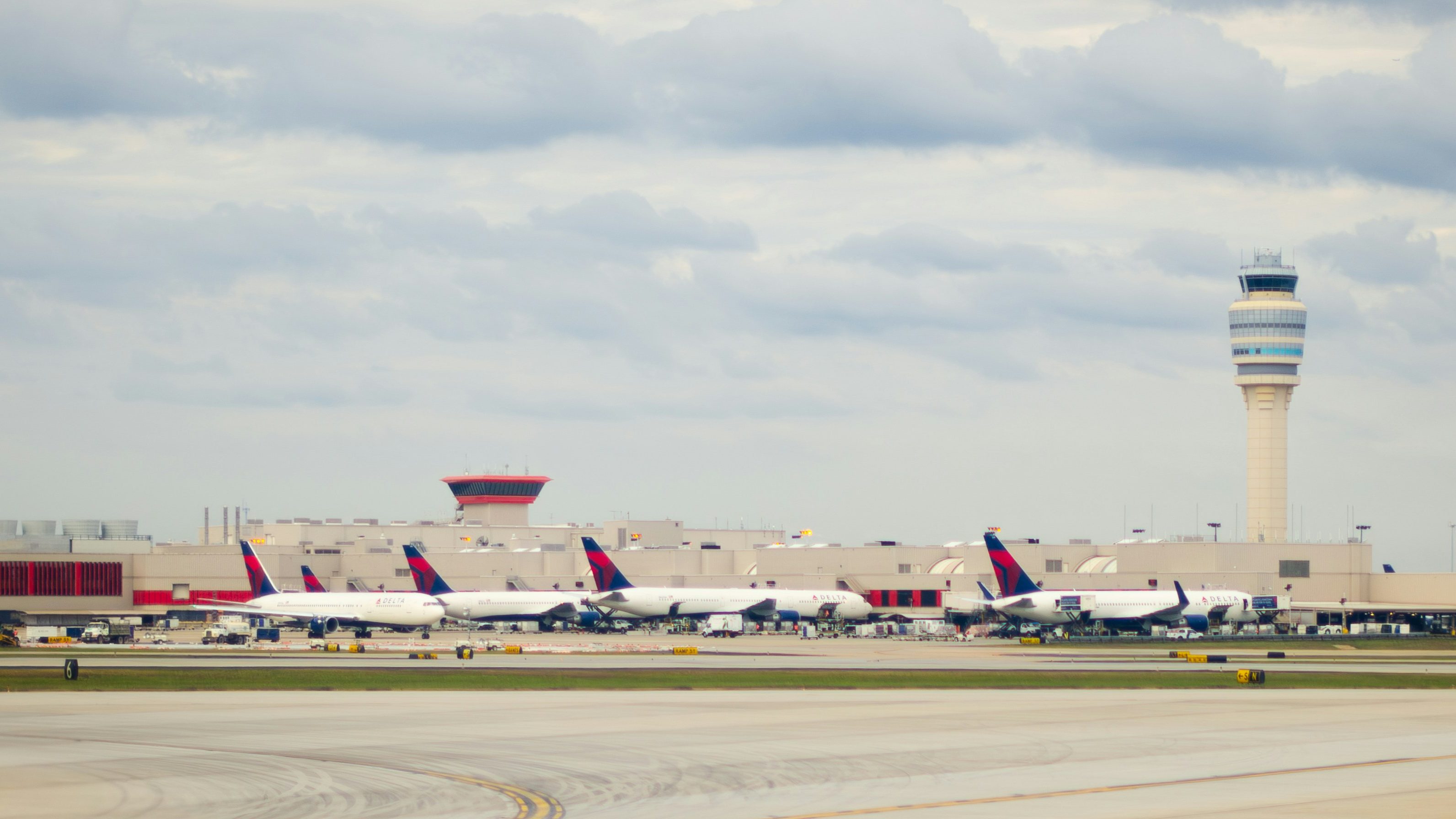
Last year, over 108 million passengers passed through Hartsfield-Jackson Atlanta International Airport on nearly 800,000 aircraft operations. ATL is the busiest airport in the world – a title it has held almost uncontested since 1998.
The stranger blinks at me, disbelief clear on their face. I take a breath and brace myself for their next question.
“Really?” they ask. “Why Atlanta?”
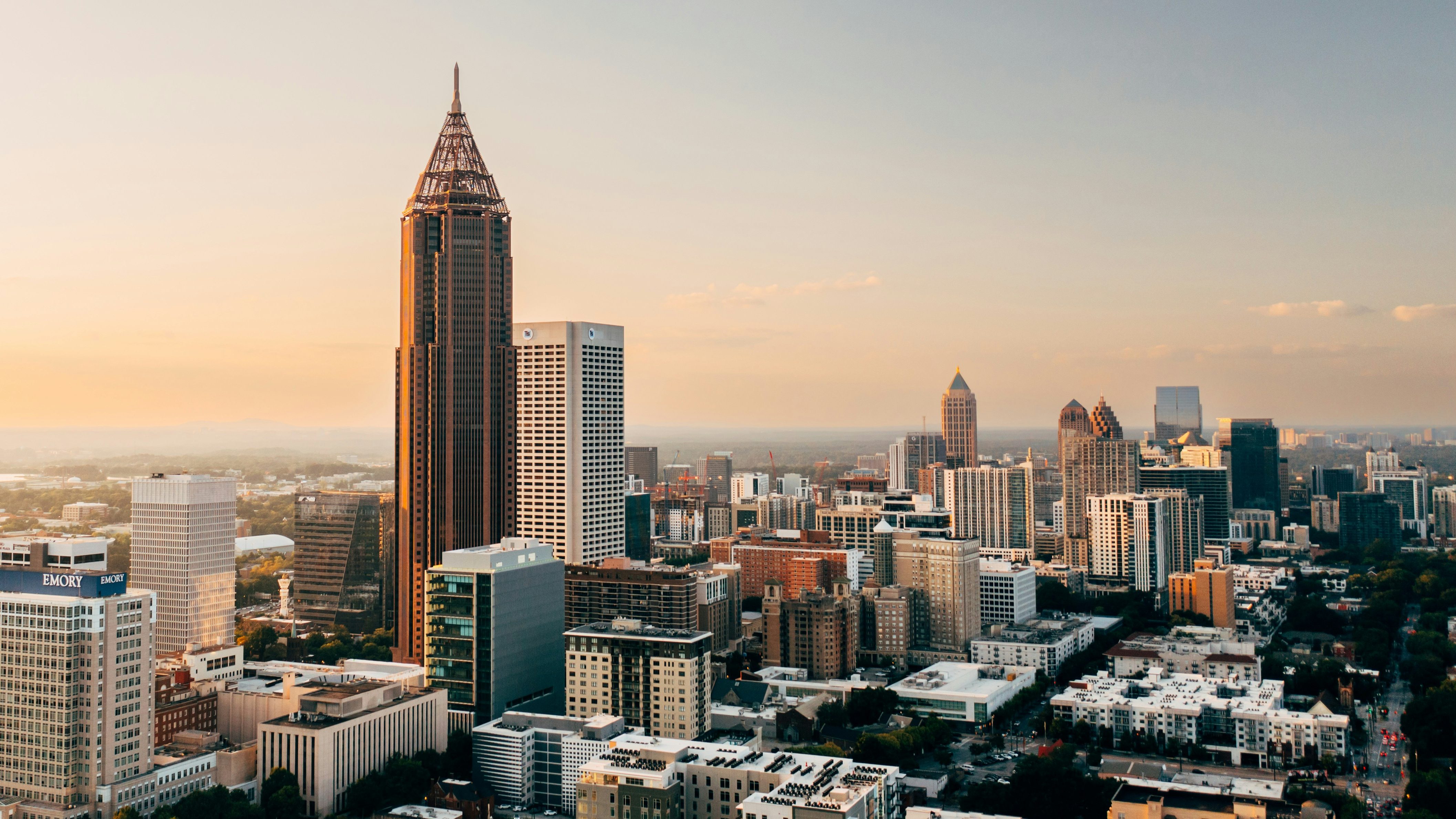
Atlanta Hartsfield-Jackson International Airport (ATL) celebrates it 100th anniversary this year. In 1925, Atlanta Mayor Walter A. Sims secured an abandoned auto racetrack on the outskirts of the city and committed to developing it into an airfield.
That same year in nearby Macon, Georgia, Huff Daland Dusters was founded as the first commercial agricultural flying company. It would relocate to Monroe, Louisiana, later that year and would eventually become one of the largest privately owned fleets in the U.S., dusting crops all the way from Georgia to California.
Huff Daland was short lived. It rebranded in 1928 and began taking passengers the following year, when it became one of the only airlines serving southern states like Texas and Mississippi. The company would rebrand several more times before settling on their current name in 1934.
In 1941, Delta Air Lines moved their headquarters to Atlanta where it has remained ever since.
As Delta grew, so did Hartsfield-Jackson. Delta pioneered the “hub and spoke” system as early as 1955 with flights from Atlanta to New York. This allowed Delta to route smaller flights through their Georgia hub – a practice the airline still uses today. By 1957, ATL was already the busiest airport in the country. Between noon and 2pm each day, it became the busiest airport in the world.
As Delta took over smaller airlines, it added routes to cities like Los Angeles and Frankfurt. Hartsfield-Jackson responded to this demand by building the world’s largest terminal complex. In 1979, Delta became the first airline in the world to board 1 million passengers in one city in one month. (It was the month of August in – you guessed it – Atlanta.)
The partnership between Hartsfield-Jackson and Delta Air Lines is evident in every milestone of their shared history. In 1991, for example, Delta purchased all of Pan Am’s trans-Atlantic routes and the Pan Am Shuttle. It was the largest acquisition of flights in airline history. ATL opened Concourse E three years later. It was the largest, single international facility in the nation at the time.
Today, Delta offers direct flights from Atlanta to just about everywhere, and Hartsfield-Jackson is constantly expanding to match this demand.
In short, ATL thrives because Delta thrives.
But you’ll know if you’ve flown on Delta Air Lines that Atlanta isn’t their only hub. Sure, Atlanta is their headquarters – but Delta uses the same hub and spoke system in Minneapolis, Detroit, Boston, Los Angeles, Seattle, New York, and Salt Lake City.
We know why Atlanta. But why not JFK or LaGuardia?
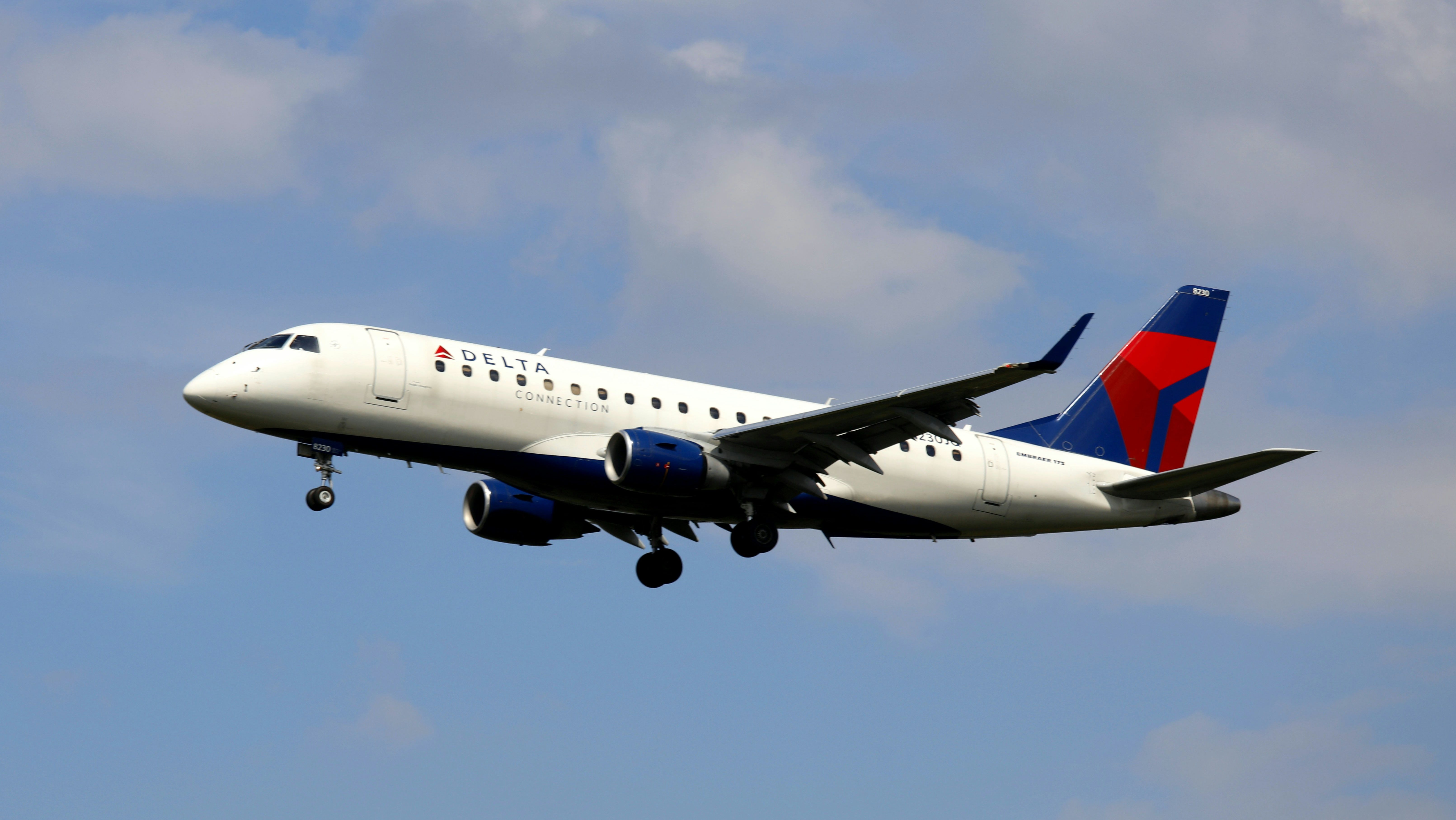
The short answer is that Atlanta is the perfect place to have an airport.
No – really.
Hartsfield-Jackson has a far larger “catchment area” than most other airports in the country. A catchment area is used to define how many people an airport serves – in other words, how far is it from the nearest airport of a comparable size?
Atlanta hits the perfect sweet spot for a catchment area. It’s not so close to other metropolitan areas that it has to deal with competition from their airports – but it’s still centrally located enough to be within a two-hour flight of 80% of the country’s population.
As a result, passengers from smaller airports in the Southeastern U.S. may find themselves being routed through Atlanta – or, if they live close enough, they may even drive the full distance to ATL for a flight.
Hartsfield-Jackson is also unique in that it doesn’t share Atlanta’s catchment area with another local airport. There are other airports in the city, but they’re either private airports or they aren’t serviced by major airlines. (Cobb County Airport, for example, receives mainly private jets.) This means that all commercial flight traffic in Atlanta goes through a single airport.
In contrast, New York City’s 145 million passengers last year were split across the JFK, LaGuardia, and Newark airports. Even though JFK received a record-breaking 63 million passengers in 2024, it still pales in comparison to Hartsfield-Jackson’s 108 million.
This trend repeats itself across most major U.S. cities. Chicago’s traffic is generally split between O’Hare and Midway. Washington, D.C., has Dulles and Reagon. Houston has Hobby and Bush.
It even happens internationally. Dubai International Airport was the second busiest airport in the world last year with over 79 million passengers. But Dubai’s traffic is also split across three airports: Sharjah Airport welcomed an additional 17 million people in 2024 and Zayed International Airport welcomed 29 million. Once again – ATL beats all three by virtue of being the only option.
But airport managers aren’t just worried about competition on the ground. Smaller catchment areas can also mean more competing air traffic and more potential for delayed flights.
New York City, for example, has the most congested and complex airspace in the country. Its airports are close together – JFK and LaGuardia are only 10 miles apart – meaning conflicts between approaches and departures have to be handled with care.
To make matters worse, the nearby airports in Philadelphia and Washington, D.C., are wrestling with similar complexities of their own. Combined, these three cities create one of the densest air traffic pockets in the world. These complexities can cause flight delays and in extreme cases – like earlier this year in D.C. – accidents on the runway.
Hartsfield-Jackson, as we learned above, dominates the airspace around Atlanta and even around the Southeastern U.S. It should come as no surprise that it ranked fourth in the country for the fewest delayed flights last year. (Though it probably also helps that Atlanta is rarely impacted by major weather events like blizzards or hurricanes.)
It just goes to show – location matters.

Atlanta’s airport isn’t just perfectly situated within its airspace and its catchment area. It’s also perfectly situated within the city – or, rather, without.
Hartsfield-Jackson is about 10 miles outside Atlanta proper – close enough to be convenient, but far enough that it’s been able to expand beyond its original 287 acres without tearing down parts of the city. The current airport has seven public concourses – in addition to a private terminal which opened in 2023. Concourse D is currently under construction as part of an ambitious expansion plan to accommodate larger aircraft at its gates and increase seating capacity inside the airport.
Compare that to LaGuardia – one of the most logistically challenging airports in the country. At 680 acres, LGA is unlikely to increase its capacity any time soon. On one side, it’s bordered by the most densely populated city in the country. On the other, it butts up against a rising coastline. (It doesn’t help that LaGuardia was built on a former landfill and is actively sinking into the ocean.)
So is ATL busy because it’s big? Yes and no. When it comes to airports, size does matter. But not as much as you think.
With a modest 4,700 acres (almost seven times the size of LaGuardia), Hartsfield-Jackson isn’t even among the top ten biggest airports in the country – much less the world.
Denver International Airport takes the number one spot in the U.S. at a whopping 33,531 acres – over 23 times the size of Hartsfield-Jackson. It already has six runways to Atlanta’s five, including the longest commercial runway in North America. Even more astounding is that it was built with room to grow and has the capacity for six additional runways.
Despite its impressive size, Denver received 25 million fewer passengers than Atlanta last year.
Hartsfield-Jackson may have fewer runways, but it manages them well. Each runway is designed to accommodate a different type of aircraft, and their parallel layout allows for efficient traffic management and advanced coordination. At its peak, ATL can accommodate an astonishing 200 aircraft movements per hour.
The terminals are designed with similar efficiencies in mind. Passengers enter Hartsfield-Jackson from a single security building before taking either the underground walkway or the underground train to their concourse. The train runs in a straight line, bouncing back and forth between the seven concourses which are all parallel to one another.
The “plane train” can transport up to 10,000 passengers per hour, vastly reducing the transit times between gates and improving the overall passenger experience. Outside of convenience, this underground transit system also creates more freedom of movement for the planes on the airfield above.
“ATL is not just an airport,” former General Manager John Selden said in a 2024 article. “[I]t’s a city within a city, designed to move millions with precision and care.”
Hartsfield-Jackson’s ability to manage a high number of passengers with significantly less space than its counterparts is why it’s been called the most efficient airport in the world almost as often as it’s been called the busiest.
In short – Hartsfield-Jackson is simply well-designed.
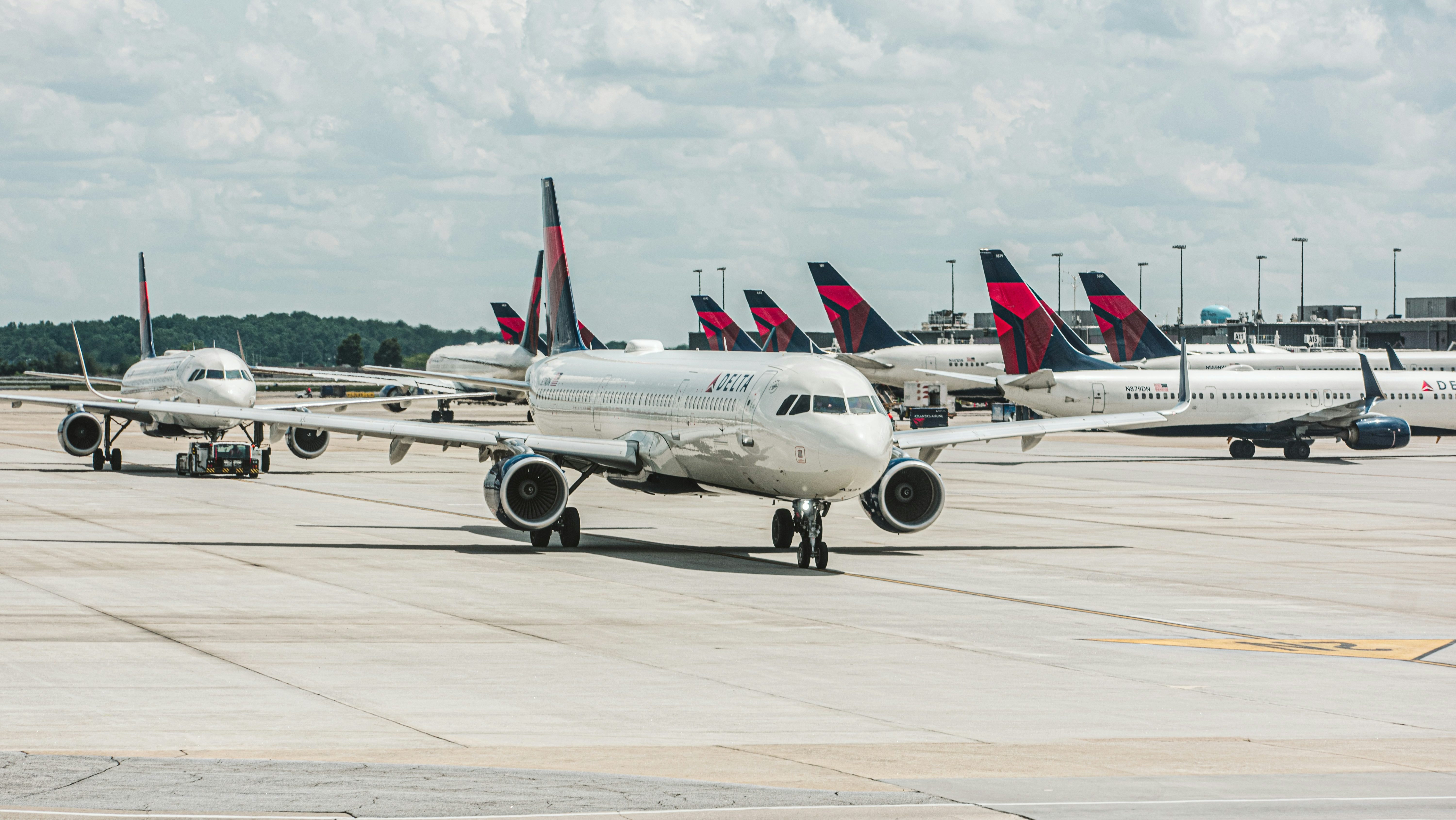
I’ve spent a lot of time at the Atlanta airport, and I’m usually the first in line to complain about it.
It’s always hot and crowded. There’s always a line at security, and the TSA agents there are notoriously rude. I’ve learned the hard way that I have to plan for extra transit time just to walk to my gate. I could take the “plane train”, but the public health professional in me always balks when those doors slide open and a crowd of coughing strangers files out.
Still – I’ve often found myself criticizing other airports when I travel. Once you’ve experienced the efficiency of ATL, it’s hard to forget it.
LAX is a mess of hidden tunnels and winding corridors. Dulles always feels like a labyrinth, too – and I can never figure out how they chose the order for the flags in Concourse B. The first time I flew out of Denver, I was shocked at just how poorly designed the airport security was. Newark, JFK, and LaGuardia are so well-known for flight delays that they’ve been consistently ranked as the worst airports in the country.
Is Hartsfield-Jackson perfect? No – certainly not.
“But,” I might tell that stranger at a party when they ask me about Atlanta’s airport. “At least it’s interesting.”


Leave a Reply